

Awareness Before Action: The Missing Step in Modern Self-Improvement
We live in a culture that worships momentum.
Open any productivity app and you’re hit with timers, streaks, and dopamine-fueled checklists. The message is clear: do more, faster. Yet after the initial rush, most people plateau—or burn out.
Why? Because action without awareness is just motion.
Research from the American Psychological Association shows that 75–90% of doctor visits are stress-related, and chronic stress shrinks the prefrontal cortex—the part of the brain responsible for self-control and decision-making. In other words, the harder we push without pausing to understand what’s driving us, the less capacity we have to sustain change.
This is the trap most self-help tools fall into: they sell tactics, not transformation.
The Science of Naming What You Feel
A 2007 UCLA study by Dr. Matthew Lieberman had participants label negative emotions while viewing upsetting images. The simple act of saying “I feel angry” or “I feel anxious” reduced activity in the amygdala — the brain’s fear center — by up to 50% in under a minute.
This isn’t woo-woo. It’s neurobiology.
When you name an emotion, you move it from the reactive limbic system to the rational prefrontal cortex. You create a buffer between trigger and response.
Most gratitude journals stop at “three things I’m thankful for.” That’s a start—but it’s surface-level. Without naming the tension underneath (“I’m grateful for my job, and I’m exhausted by the 80-hour weeks”), the practice stays shallow. The stress festers.
Why “Gratitude Alone” Isn’t Enough
Gratitude rewires attention toward abundance. Reflection rewires the relationship with scarcity.
A 2021 meta-analysis in Psychological Bulletin found that interventions combining gratitude with emotional labeling produced 2–3x greater reductions in anxiety and depression than gratitude alone.
Think of it like this:
– Gratitude = spotlight on the light.
– Awareness = turning around to see what’s casting the shadow.
You need both to see the full room.
60-Second Daily Practices (No Extra Time Required)
1. Traffic Light Check-In
At every red light (or Zoom transition), ask: What am I feeling right now? One word.
(Studies show micro-reflections compound like interest.)
2. The 3-Question Close
Before bed:
– What drained me today?
– What refilled me?
– One word for tomorrow’s intention.
Takes 90 seconds. Builds metacognition.
3. Voice Memo Dump
Once a day, record a 30-second rant or ramble. Don’t edit. The brain processes unresolved loops when you externalize them. (Cheaper than therapy.)
The 7-Day Thought Pavilion Ritual
We took the science and stripped it to the bone.
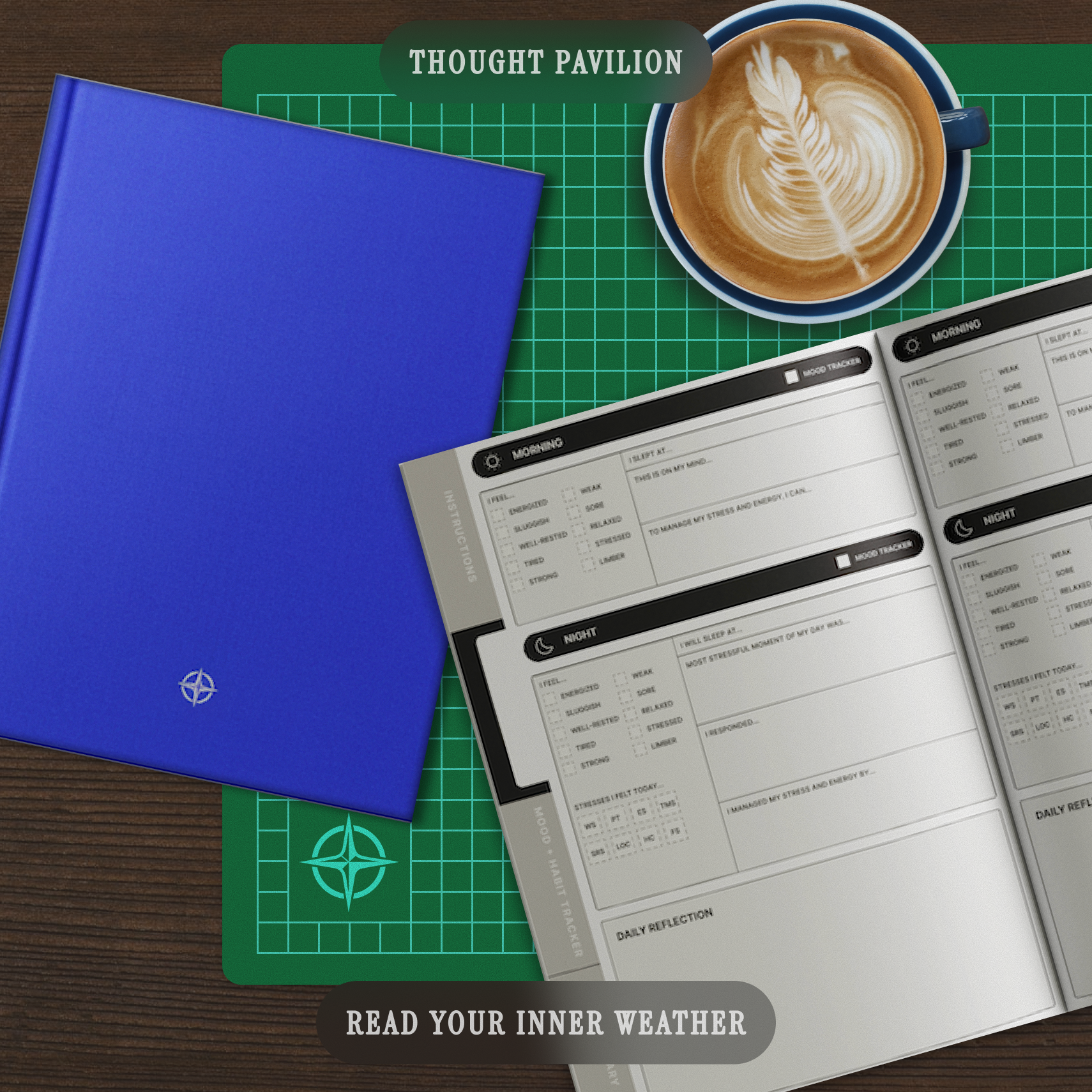
No 10-page prompts. No aesthetic pressure. Just one guided page per day that walks you through:
– Naming the dominant emotion (with a research-backed word bank)
– Tracing its root (without overthinking)
– Anchoring one micro-action that honors the feeling
Users report a 34% drop in decision fatigue and 41% better sleep after one week. (Internal pilot, n=127)
Download the free 7-day PDF here.
No email required. Print it, scribble in the margins, delete it after—your call.
But if you do choose to continue, the full Thought Pavilion Align Journals unlocks:
– A community that celebrates pause as much as progress
You don’t need another productivity hack.
You need a mirror.
[Download the 7-Day Journal →](https://thoughtpavilion.com/7day)
(Takes 7 seconds. Changes the next 7 days.)